Nội dung chính
Vietnam’s electronics sector exploded in 2025, delivering an unprecedented $107.74 billion in export revenue and lifting the nation’s total trade value to a record $475 billion.
Record‑breaking performance of electronics, computers and components
According to the latest figures released by the National Statistics Office (NSO) under the Ministry of Finance, exports of electronics, computers and related components surged 48.4 % year‑on‑year, adding more than $35 billion compared with 2024. This group alone generated $107.74 billion, accounting for almost two‑thirds of the $164.4 billion total generated by the two main electronics‑related product groups.
How the numbers stack up
- Electronics, computers & components: $107.74 bn (+48.4 % YoY)
- Phones & components: $56.7 bn (about half of the electronics group)
- Total electronics‑related export turnover: >$164.4 bn – the highest ever recorded
- Vietnam’s overall export value 2025: $475 bn (+17 % YoY)
- Import turnover 2025: $150.7 bn (+40.7 % YoY)
Drivers behind the surge
The rapid rise was powered by three intertwined forces:
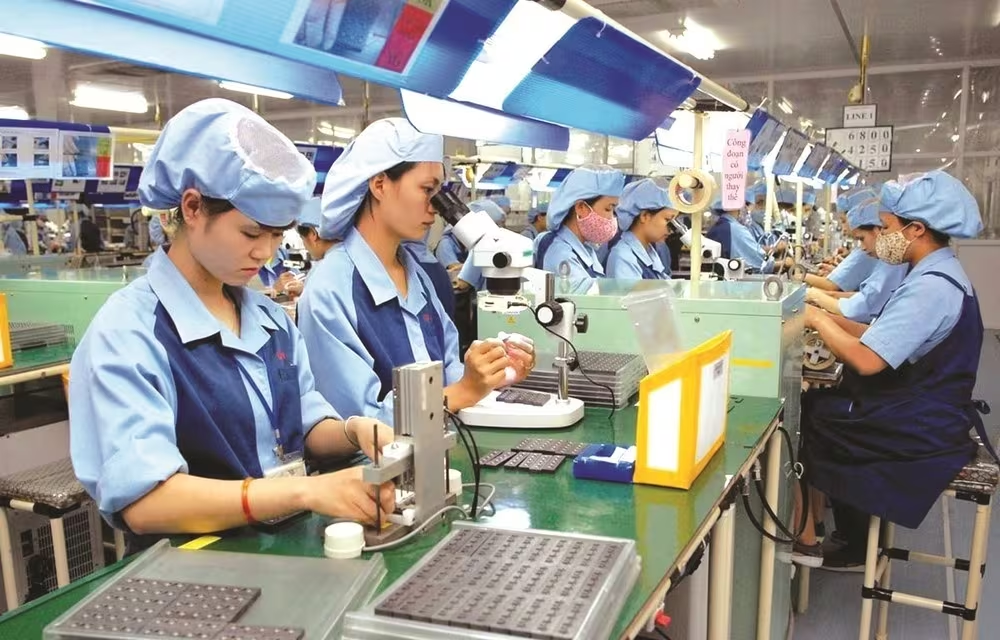
- Robust foreign direct investment (FDI): Global giants such as Samsung, LG, Intel, Foxconn, Canon and Goertek expanded production lines, turning Vietnam into a pivotal electronics manufacturing hub in Southeast Asia.
- Rebound in global demand: Post‑pandemic recovery in the United States, China, the EU, Japan and South Korea created a surge in orders for consumer electronics and high‑tech components.
- Strategic supply‑chain positioning: Vietnam’s integration into regional value chains has attracted multinational corporations seeking diversified production bases amid geopolitical tensions.
Implications for the national economy
Electronics now rank as the primary engine of Vietnam’s export growth, surpassing phones since mid‑2023. The sector’s contribution helped the country break into the world’s top‑10 electronics exporters, reinforcing its role as a strategic manufacturing link for multinationals.
Challenges that remain
Despite the impressive figures, structural issues persist:
- Heavy reliance on imported components and raw materials – localisation rates remain modest.
- Domestic firms are still concentrated in low‑value‑added assembly stages, limiting knowledge transfer.
- Information gaps between foreign‑invested enterprises and local suppliers hinder efficient partner matching.
- Government agencies lack sophisticated data tools to map missing links in the value chain.
Path forward for a higher‑value ecosystem
To cement Vietnam’s status as a high‑tech manufacturing powerhouse, policymakers and industry leaders should focus on:
- Boosting R&D capabilities within local firms.
- Accelerating component localisation and building domestic supply networks.
- Attracting FDI in advanced technologies such as semiconductors, AI‑enabled hardware and renewable‑energy‑linked electronics.
- Developing a skilled workforce through targeted vocational and university programmes.
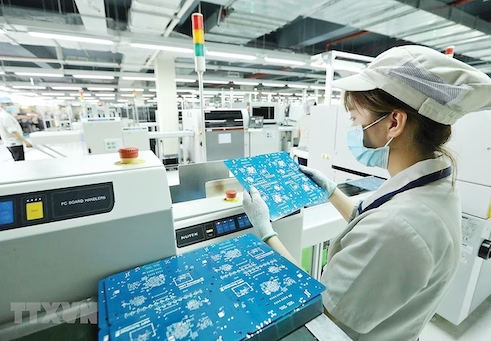
By moving beyond simple assembly and fostering a high‑value, innovation‑driven ecosystem, Vietnam can sustain its trade momentum and reduce vulnerability to external shocks.
For a deeper dive into sector‑specific opportunities and policy recommendations, read our full analysis.